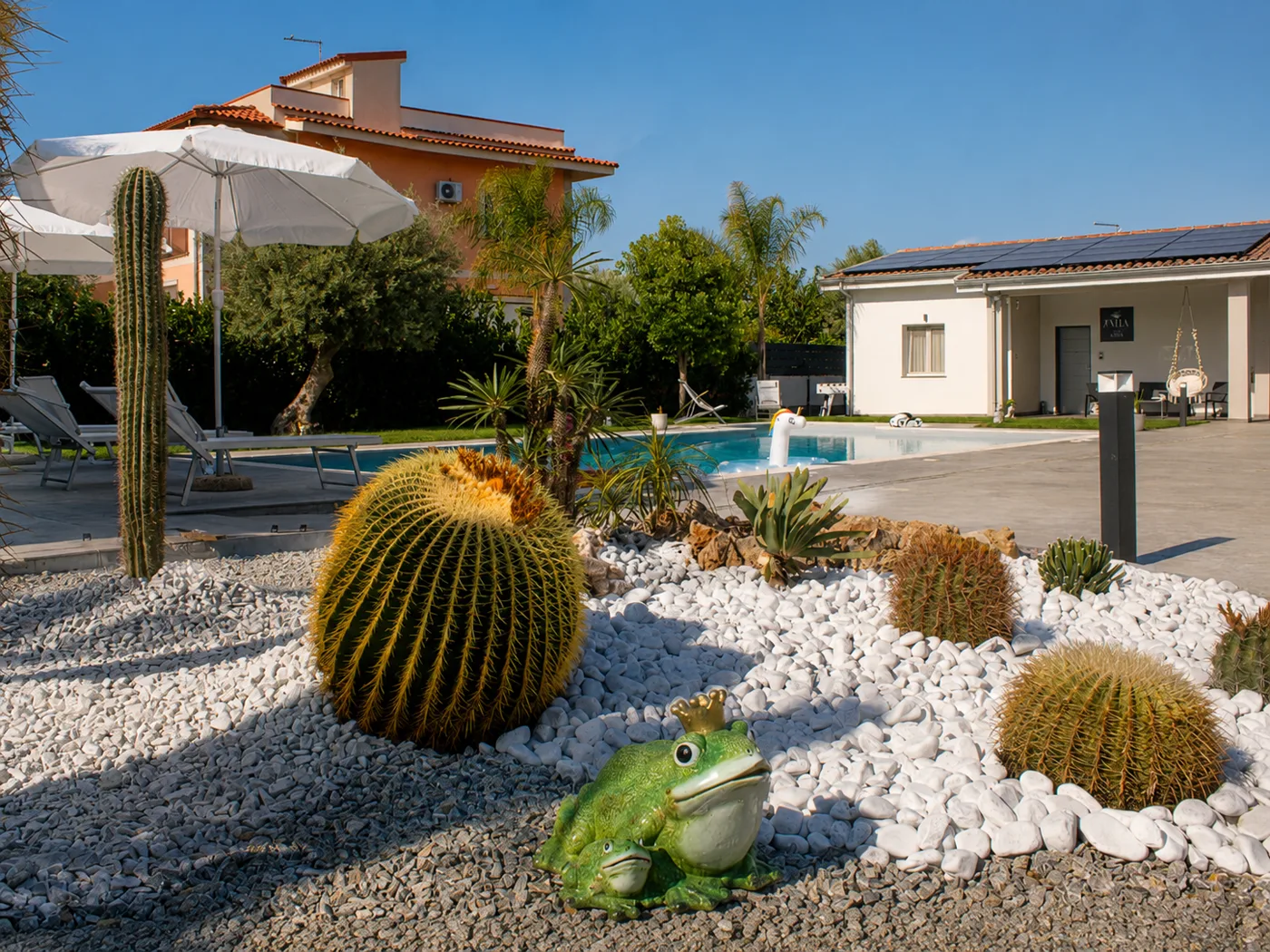
Syracuse is one of the most captivating cities in the Mediterranean: 2,700 years of history, from the Greek colonies to the Baroque, wrapped in golden stone and sea. Here is what to see in Syracuse and its island heart, Ortygia, with practical tips. Villa Natìa is about a 10-minute drive from the centre.
Ortygia, the heart of Syracuse
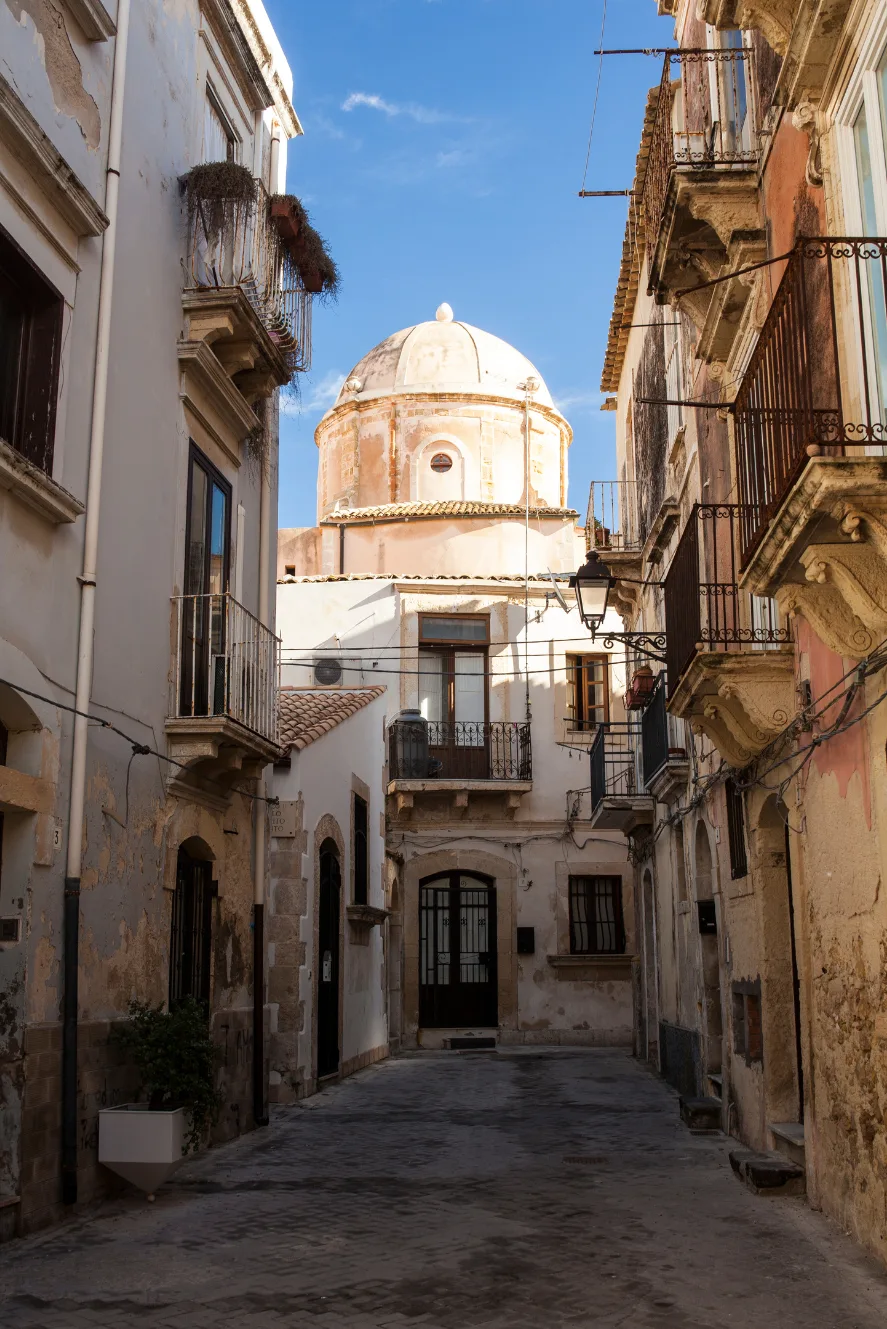
Ortygia is the small island where Syracuse was born, linked to the mainland by a bridge and entirely walkable. A maze of alleys, Baroque palaces, courtyards and glimpses of the sea: the place to wander slowly, especially at sunset and aperitivo time.
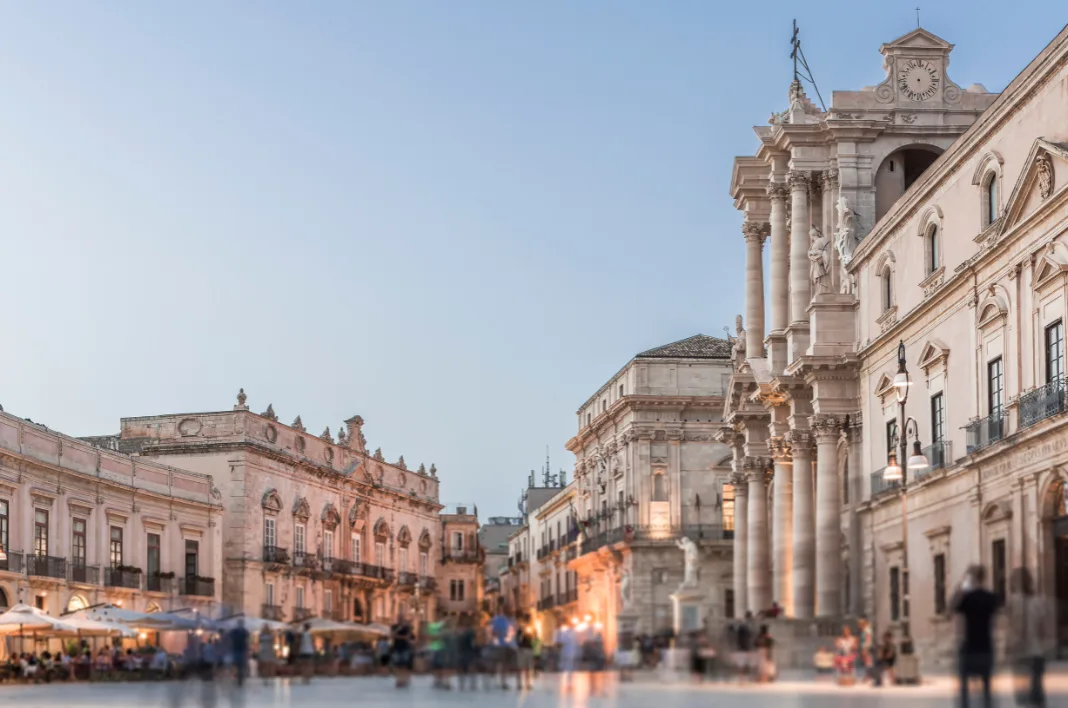
Piazza Duomo and the Cathedral
Piazza Duomo is one of the finest Baroque squares in Italy. The Cathedral of Syracuse is built literally inside a Greek temple: the Doric columns of the Temple of Athena (5th century BC) are still visible in its walls, crowned by a spectacular 18th-century Baroque façade.
The Fountain of Arethusa
Overlooking the sea, the Fountain of Arethusa is a freshwater spring tied to the myth of the nymph Arethusa. Here grows wild papyrus, one of the very few colonies in Europe: a detail we hold dear at Villa Natìa, as papyrus is our very emblem.
The Temple of Apollo and the market
At the entrance to the island stand the remains of the Temple of Apollo, among the oldest Doric temples in Sicily. Beside it, each morning, the lively Ortygia market comes alive with fresh fish, cheeses, spices and street food.
Maniace Castle
At the tip of the island stands Maniace Castle, a fortress built by Frederick II in the 13th century, jutting out over the open sea.
The Neapolis Archaeological Park
On the mainland, the Neapolis Archaeological Park preserves some of the most important monuments of Magna Graecia.
- Greek Theatre — one of the largest of the ancient world, carved into the rock in the 5th century BC. It still hosts the classical performances of the INDA, usually between late May and early July.
- Ear of Dionysius — a striking ear-shaped cave in the Latomia del Paradiso, with astonishing acoustics. The name is traditionally attributed to Caravaggio.
- Roman Amphitheatre and Altar of Hieron II — traces of the Roman and Hellenistic ages.
Practical tips for your visit
When to go
The best seasons are spring (April-June) and early autumn (September-October): mild weather and fewer crowds. Summer adds the sea and open-air theatre, but is hotter and busier.
Getting around
Ortygia is a limited-traffic zone and is best explored on foot: leave the car in the car parks at the entrance to the island. From Villa Natìa the centre is about 10 minutes away.
Around Syracuse
Syracuse is also a great base: the Baroque of the Val di Noto (Noto about 40 minutes away, then Modica and Ragusa Ibla), the beaches and nature reserves of the coast and the fishing villages. See an overview on our Area page.
Frequently asked questions
How far is Villa Natìa from Ortygia?
About a 10-minute drive: the villa is in the Syracuse countryside, close to the centre yet away from the bustle.
When is the best time to visit Syracuse?
Spring and early autumn for weather and quiet; summer for the sea and classical theatre.
Do I need a car?
Not for Ortygia, which is walkable. Yes for beaches, reserves and the Baroque towns nearby.
How much time do I need?
One day for Ortygia and Neapolis; two or three to enjoy the sea and surroundings too.